/59748.tmb-300v.png?sfvrsn=9885965b_2 "For the future - publication thumbnail")
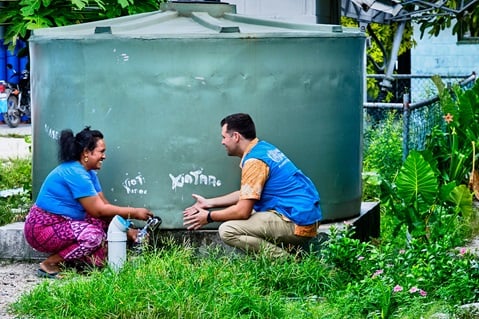
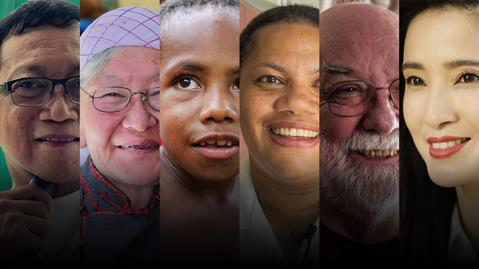
In Seoul, a mother checks the air quality before walking her son to school. In Cambodia, farmers watch the horizon for haze drifting across fields. In Solomon Islands, residents smell the smoke from open burning and use of polluting fuels for cooking. Across Asia and the Pacific, families share the same hope: that the next breath will be a safe one.
The air we breathe connects us all: children walking to school, workers commuting to their jobs, elders stepping outside for fresh air. Yet for millions across Asia and the Pacific, that “fresh air” carries invisible dangers: particles and pollutants that lodge deep in the lungs, strain the heart, enter the bloodstream, and ultimately shorten lives. When the air that connects us is polluted, the consequences ripple through communities, economies and generations. But the same shared air also connects us through solutions that work best when countries act together.
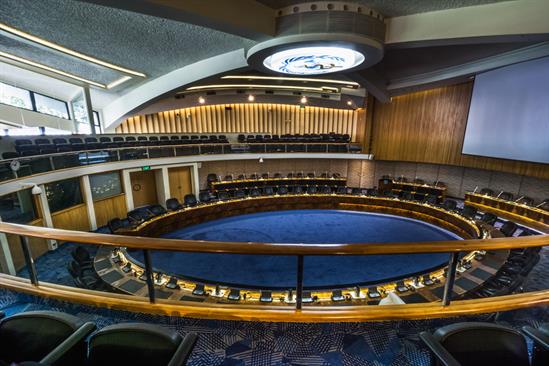
This spirit of shared responsibility brought government representatives, scientists, and partners together in Seoul, Republic of Korea, for the 2025 Meeting and Workshop of the Thematic Working Group on Air Quality and Health (TWG-AQH).
Co-organized by the National Institute of Environmental Research of the Republic of Korea, the WHO Asia-Pacific Centre for Environment and Health in the Western Pacific Region (WHO ACE), and the United Nations Environment Programme (UNEP), the gathering marked another step towards cleaner air and healthier lives across the region.
Air pollution: a major health and economic threat in Asia-Pacific
Air pollution remains one of the leading causes of disease and premature mortality in Asia and the Pacific. Both outdoor and household air pollution are major drivers of cardiovascular and respiratory diseases, placing enormous pressure on health systems and communities.
Beyond the human toll lies a steep economic toll. According to UNEP, air pollution drains more than US$ 8 trillion from the global economy - over 6% of global gross domestic product. The right to clean air is recognized as a basic human right, and WHO has called for urgent action to halve premature deaths from human-made air pollution by 2040.
Air pollution crosses borders, shifts with seasons, and rises with industrial growth and climate change. No country can tackle it alone, but by working together, extraordinary progress can be made.
A platform for collaboration, shared learning, and action
/teams/asia-pacific-centre-for-environment-and-health-in-wpr-(ace)/feature-photo-1.jpg?sfvrsn=90a42a96_5 "Meeting presentation")
Photo © NIER / Soyoung Jung – Former chair of the TWG-AQH Dr Yun-Chul Hong presenting air pollution health impacts across Asia and the Pacific.
Across the Western Pacific Region, countries are finding new ways to protect their communities, recognizing that the fastest progress comes from working together by sharing practical policy and programatic experiences that could be replicated. Some examples include:
- Republic of Korea: Significant progress has been made in reducing major pollutants such as particulate matter, while addressing rising ozone levels linked to secondary formation (chemical reaction in the atmosphere).
- Cambodia: A long-term strategy for carbon neutrality by 2050 was supported by key legal frameworks despite challenges related to technical expertise, funding, public awareness and inter-agency coordination.
- Indonesia: There has been strengthened control of pollution sources - such as regulation of vehicle emission standards - though challenges still exist related to low-sulfur fuel supply constraints and weak local capacity.
- Japan: Extensive monitoring stations and more open availability of data are helping families better understand the quality of the air they breathe, but high level of ozone arequires a need to further embed photochemical oxidants into the air quality alert system.
- Lao People’s Democratic Republic: The country has expanded air quality monitoring essential for controlling major sources of air pollution, such as agricultural burning, wildfires, vehicle emissions, industrial activities and waste burning, which remains high.
- Malaysia: An integrated air quality monitoring system was presentedwith real-time dissemination and strong regional collaboration are reflected through recent engagement with UNFCCC, and the ASEAN Haze Agreement.
- Thailand: A multi-level monitoring system and a new Clean Air Action Plan (2025–2028) have been launched, as well as public health interventions, including the Public Health Emergency Operations Center, pollution clinics and health risk communication initiatives.
Across all discussions, one message came through clearly: regional solidarity accelerates progress.
Cleaner air means fewer hospital visits, healthier children and communities, stronger economies, and reduced pressure on health systems. Investing in air quality is not just good for health -, it's a smart economic investment.
Turning science into solutions
Participants at the meeting learnt about the main findings of a new publication from WHO ACE and WHO headquarters, Regional perspectives on air quality and health: WHO Western Pacific Region. The presentation was given by Mr Josselyn Mothe, Technical Officer from the WHO Regional Office for the Western Pacific, who led development of the document.
Hands-on sessions focused on air pollution exposure modelling and health impact assessments to support countries in quantifying health impacts and informing policy decisions.
One highlight was the demonstration of AirQ+, a WHO tool that translates air quality data into clear estimates of health impacts without requiring advanced modelling or specialist skills. The tool helps decision-makers understand which actions will deliver the greatest benefits.
Delegates also visited the Seoul Metropolitan Area Air Quality Research Center, which offered them a glimpse of state-of-the-art technologies for measuring particulate matter, ozone and other pollutants with high-resolution instruments.
/teams/asia-pacific-centre-for-environment-and-health-in-wpr-(ace)/feature-photo-2.jpg?sfvrsn=c146dec7_1 "Feature photo 2")
Photo © WHO / Josselyn Mothe – Air quality monitoring instrument at the Seoul Metropolitan Area Air Quality Research Center in Bulgwang, Seoul.
/teams/asia-pacific-centre-for-environment-and-health-in-wpr-(ace)/feature-photo-3.jpg?sfvrsn=fad1defe_3 "Feature photo 3")
Photo © NIER – Delegates visiting the laboratory at the Seoul Metropolitan Area Air Quality Research Center in Bulgwang, Seoul.
A shared vision for clean air and healthy lives
Air pollution cannot be addressed in isolation. As countries work towards the next TWG-AQH milestones in 2026 and beyond, the momentum generated in Seoul marks a crucial step towards a future where every person in the region can breathe clean air and lead a healthier life.
“Clean air policies work, and the TWG-AQH helps countries design and implement them,” said Dr Enkhtsetseg Shinee, Coordinator, WHO ACE. “By linking health, environment and development priorities, this thematic group supports reforms that benefit the people, environment and the planet. The Jakarta Declaration reaffirmed countries’ commitment to tackling the health impacts of air pollution. Despite the capacity and financial barriers the countries in our region are facing, the TWG-AQH can play a vital role in supporting these commitments through shared knowledge, coordinated action and stronger regional partnerships.”
/teams/asia-pacific-centre-for-environment-and-health-in-wpr-(ace)/feature-photo-4.jpg?sfvrsn=10445abb_3 "Feature photo 4")
Photo © WHO/Josselyn Mothe – Group photo of the Thematic Working Group on Air Quality and Health (TWG-AQH)
A region where every child breathes clean air is not an aspiration - it is a choice. The TWG-AQH is helping countries make that choice together.
About the TWG-AQH and Asia-Pacific Regional Forum on Health and Environment: regional solidarity and shared purpose
The Thematic Working Group on Air Quality and Health (TWG-AQH) operates under the Asia-Pacific Regional Forum on Health and Environment - a multilateral mechanism - as its operational body. Co-chaired by the Republic of Korea and Cambodia, the Regional Forum brings together government agencies, experts and partners to reduce the health impacts of air pollution and advance regional collaboration.
Established in 2004, the Asia-Pacific Regional Forum on Health and the Environment recognizes the many ways environmental hazards affect health and aims to create stronger synergies between government departments to address environmental and health issues. The Forum addresses environment and health priorities - at both ministerial and high-level official levels - in ways that add value to the ongoing efforts of countries and other regional and subregional bodies. The United Nations Environment Programme (UNEP) and the WHO regional offices for South-East Asia and the Western Pacific serve as its Secretariat.
Looking ahead, the TWG-AQH offers a regionally coordinated, evidence-based mechanism to drive solutions that:
- Reduce premature deaths from air pollution
- Strengthen national early warning and monitoring systems
- Build technical capacity in health impact assessment
- Support clean air policy reforms
- Expand data-driven decision-making across the Asia-Pacific region.