On 25 March 2026, WHO Regional Office for the South‑East Asia Region (SEARO) convened the first meeting of the SEAR Chapter of the Unity Studies Network Meeting in 2026 to take stock of progress and plan next steps for strengthening epidemic and pandemic preparedness across the Region. The meeting focused on reviewing the ongoing adaptation of selected, standard Unity Study methodologies, sharing field implementation experiences from 2025, and identifying key priorities to guide collaborative work in 2026.
Held virtually, the meeting brought together representatives from six Unity Studies network sites across five countries (Bangladesh, India, Nepal, Sri Lanka, and Thailand) as well as participants from all three levels of WHO.
The meeting took place against the backdrop of ongoing regional efforts in South‑East Asia to strengthen early investigations and studies for epidemic and pandemic preparedness, with a focus on pandemic influenza and other emerging respiratory pathogens with epidemic and pandemic potential. In this context, and as part of preparedness for the rapid generation of evidence, the WHO Health Emergencies Programme in SEAR (WHE/SEAR) encourages Unity Studies sites to adapt prioritized, standardized Unity Study protocols to their national contexts. This approach supports the generation of timely and reliable evidence to inform public health decision‑making during epidemics and pandemics.
These efforts are supported through a combination of experience sharing, participation in the global Unity Studies network webinars, capacity‑building of the national public health workforce, and regional collaboration that promotes inter‑country, inter‑agency, and inter‑ministerial action. In parallel, sites are encouraged to explore diversified funding sources to help sustain research preparedness over the long term.
Discussions highlighted the importance of WHO’s catalytic financial support through the Pandemic Influenza Preparedness (PIP) Partnership Contributions (PIP‑PC). When combined with national and institutional resources, this support enables countries and sites to maintain continuity of activities at a core level and remain prepared to respond rapidly and effectively to future epidemics and pandemics.
Regional and Global Updates:
Opening the session, Dr Pushpa Ranjan Wijesinghe, Programme Area Manager, Pandemic and Epidemic Management (PEM) Unit, WHO Health Emergencies Programme, highlighted the progress made in operationalizing the Unity Studies Network across the Region and acknowledged the collaborative efforts of WHO at all three levels, together with country unity studies sites. He emphasized the availability of limited but catalytic funding through the Pandemic Influenza Preparedness (PIP) Partnership Contribution (PIP‑PC) workplan at SEARO to sustain network activities in 2026, while encouraging sites to leverage additional funding sources to expand implementation.
Representing SEARO, Dr Ashok Basnet, consultant, Pandemic Influenza Preparedness reported that, at the regional level, the Unity Studies Network currently includes six sites across five countries: Bangladesh, India, Nepal, Sri Lanka, and Thailand. He noted that in 2025, catalytic funding supported protocol adaptation, training, and pilot implementation. In addition, a regional Unity Studies symposium held during the Global Public Health Summit in Sri Lanka strengthened and advocated collaboration between the Unity Studies site, national decision‑making forum, relevant technical units of the ministry of health, WHO and other partners.
The symposium also highlighted the role of early investigations and studies as a key component of a multi‑source surveillance system needed at country level to generate a broad range of evidence. It underscored the critical role of country Unity Studies sites and similar research entities in generating evidence to support public health decision‑making during epidemics and pandemics.
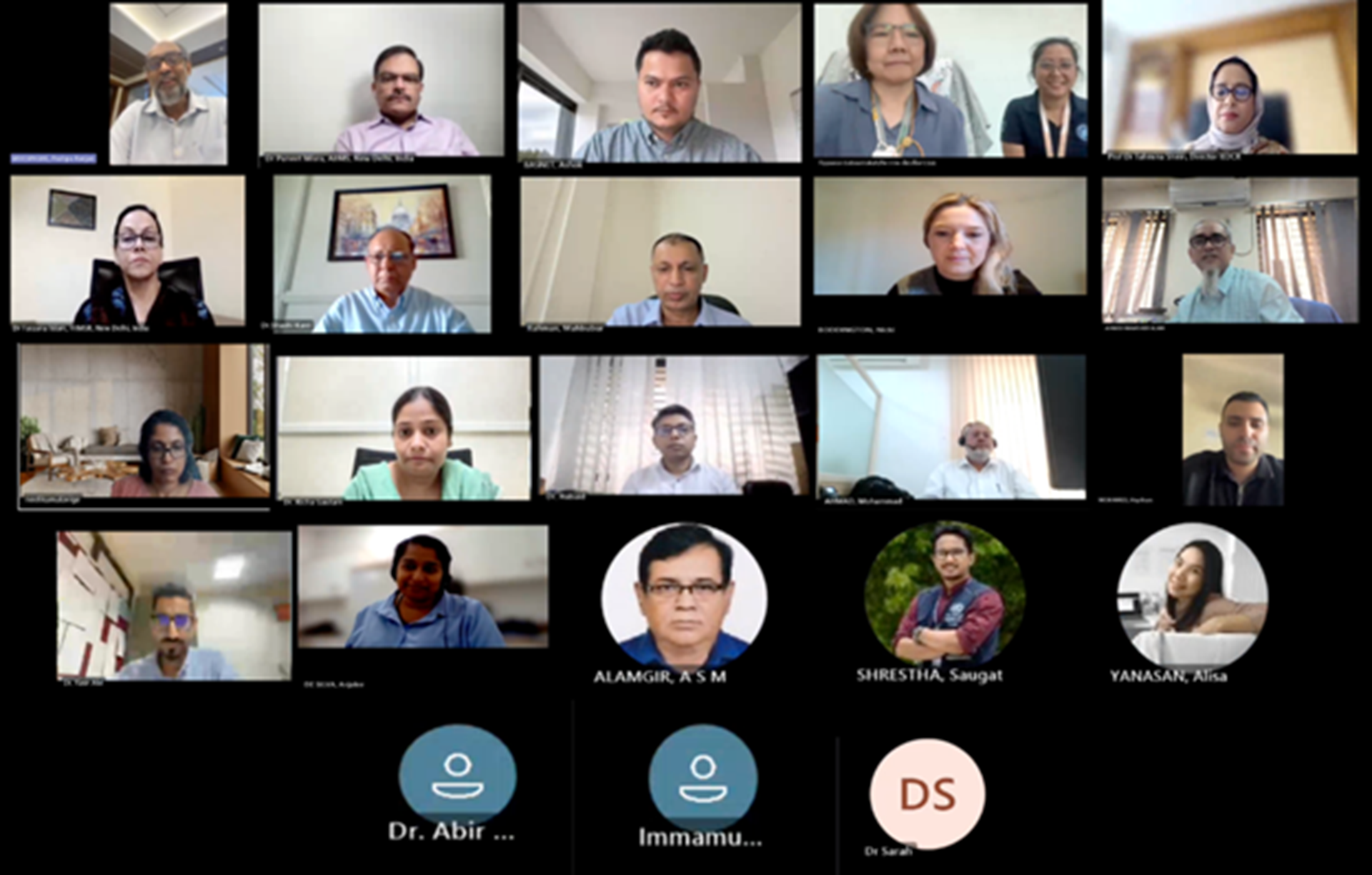
Participants of the WHO GISRS Unity Studies Sites Network- SEAR Chapter Meeting 2026 (Photo credit- PEM/WHE/SEARO).
SEARO also updated participants on ongoing efforts to develop a regional Unity Studies webpage and to promote participation in global knowledge‑sharing platforms, including webinars and the WHO Community of Practice. Priorities for 2026 include supporting the implementation of Unity protocols, strengthening collaboration and experience sharing across sites, documenting and publishing findings, integrating Unity Studies activities as a component of multi-source national surveillance systems, and building workforce capacity.
Dr Nickle Boddington of the Global Influenza Programme (GIP) at WHO Headquarters, which coordinates the Unity Studies Network globally, provided updates on global Unity Studies activities, noting that the network has expanded to 16 sites worldwide. New and updated protocols, including rapid clinical severity assessment tools and standardized data platforms, are being developed to support implementation. The global Community of Practice has also been launched to facilitate technical exchange, and continued support will be provided to sites for protocol adaptation, ethical approvals, and readiness for early investigation during outbreaks.
Updates from Unity Studies sites in SEAR in 2025
Unity Studies sites shared progress and experiences in implementing protocols across diverse country contexts. Sites initiated activities in 2025 using catalytic funding from SEARO, complemented by the mobilization of internal national resources. The Institute of Epidemiology, Disease Control and Research (IEDCR), Bangladesh, reported the adoption and piloting of investigation protocols on non‑seasonal influenza and emerging respiratory diseases during recent avian influenza outbreaks, demonstrating a multi‑source funding approach involving government, WHO and One Health partners.
The Hamdard Institute of Medical Sciences and Research (HIMSR), New Delhi, India, highlighted the piloting of household transmission investigation studies, the expansion of the national Unity Studies network, and the contribution of study findings to global evidence through published outputs. The All-India Institute of Medical Sciences (AIIMS), New Delhi, India, shared experiences from large‑scale seroprevalence studies conducted during the COVID‑19 pandemic, recent efforts to strengthen national Unity network sites through training activities, and plans to initiate multi‑centre studies on respiratory viruses.
Similarly, Prince of Songkla University, Thailand, highlighted its experience in developing integrated surveillance and diagnostic protocols for multiple respiratory pathogens, enhancing readiness for targeted investigations of emerging threats. The University of Sri Jayewardenepura, Sri Lanka, reported ongoing engagement with the Ministry of Health and exploration of additional funding sources to initiate studies. Meanwhile, the National Public Health Laboratory, Nepal, provided updates on continued coordination with national stakeholders to initiate implementation, despite delays related to the country context.
Across sites, shared experiences underscored the importance of protocol adaptation, multisectoral collaboration, and sustainable funding to operationalize Unity Studies and generate evidence for public health action.
Discussions and Way Forward
The meeting reinforced key priorities for 2026, including strengthening unity studies protocol implementation, enhancing collaboration, knowledge sharing, integrating research as a component of national multi-source surveillance systems, and ensuring that generated evidence informs public health decision‑making. Participants also emphasized the importance of documentation, visibility, and leveraging multiple funding sources, and agreed on the following action points.
Unity Studies Sites and WHO Country Offices:
- Advance adoption and implementation of at least one Unity protocol, continuing activities initiated in 2025 with catalytic funding, supplemented with other sources of funding where feasible.
- Document site-specific experiences, outcomes, and lessons learned; participate in regional and global knowledge-sharing platforms including WHO webinars and the Community of Practice.
- Work closely with ministries of health to establish unified national platforms for translating generated evidence into national public health decision-making.
- WHO Country Offices may facilitate technical support and complementary, synergistic funding opportunities where feasible.
WHO Regional Office
- Coordinate with WHO Country Offices to support implementation of core unity studies activities by network sites through catalytic funding and provide technical guidance and virtual engagement opportunities throughout 2026.
- Facilitate the participation of all Unity Studies sites in the regional meeting on Unity Studies implementation in October 2026, to be held back‑to‑back with the Annual SEAR Regional PIP‑PC Meeting; develop and host a SEAR Unity Studies website; and mobilize support from academic institutions within the SEAR Unity Studies Network to support the development of regional manuscripts that showcase Unity Studies activities to scientific audiences and promote knowledge‑sharing.
- Explore complementary funding opportunities and partnerships to sustain and expand network activities across the Region.
WHO Headquarters
- Provide global technical guidance, updated protocols, and toolkits to support the implementation of Unity Studies in SEAR.
- Facilitate engagement of SEAR sites in global webinars, the Community of Practice, and opportunities to showcase their work.
- Support joint publications, inclusion of SEAR experiences in global outputs, and identification of additional funding and collaborative opportunities to strengthen Unity Studies activities.